
Essential Elements of Dubai's Luxury Interior Design
Luxury design in Dubai in 2026 has moved decisively away from ornamentation for its own sake, chandeliers and gloss for the sake of impressiveness, toward spaces built on material authenticity, purposeful minimalism, and craftsmanship that rewards a second look. The homes and spaces defining the city’s high end right now are luxurious because of what they’re made of and how thoughtfully they’re put together, not how loudly they announce themselves.
At Wonderwall, we’ve delivered luxury interior design across Dubai’s villas, penthouses, and premium residences, and this shift shows up in nearly every client brief we take on now. Here are the elements that actually define luxury design in Dubai today.
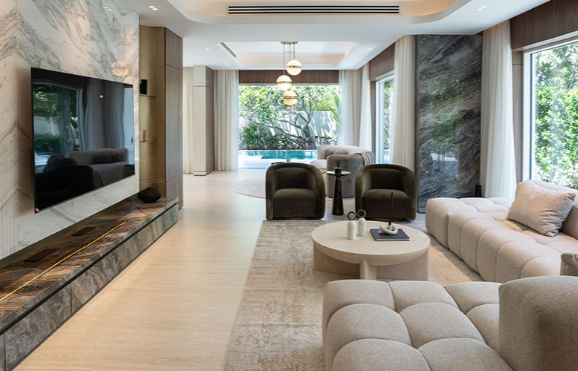
Material Authenticity Over Applied Shine
Natural stone remains at the forefront of premium interior design in the UAE, marble, granite, travertine, limestone, and onyx, but its role has expanded well beyond flooring and countertops into statement walls, sculptural staircases, and dramatic reception areas. Alongside stone, wood textures are increasingly replacing glossy finishes: walnut, oak, smoked wood, and dark veneer add depth in a way high-shine surfaces can’t. What unites this shift is authenticity, materials chosen for how they age and feel over decades, not just how they photograph on day one.Warm Minimalism, Not Empty Minimalism
Minimalism in Dubai’s luxury market has evolved into something more purposeful and locally inspired rather than stark or empty. It shows up as neutral palettes, sand, ivory, taupe, and muted greys, paired with natural textures that add warmth without visual noise. The goal isn’t a bare room; it’s a room where every element earns its place, letting a few strong material and furniture choices carry the space rather than filling it with decoration.Biophilic Connection to the Outdoors
Given the UAE’s dry climate, biophilic design has become a deliberate way to bridge the gap between interior spaces and nature, incorporating natural light, indoor greenery, water features, and large sliding doors that blur the line between inside and outside. In villas specifically, internal courtyards and landscaped terraces extend this connection further, treating the boundary between built space and landscape as something to soften rather than seal.Invisible Technology as the New Baseline
Smart home technology is no longer a luxury add-on in Dubai residences, it’s the expected baseline, but the defining shift in 2026 is that the best implementations disappear into the design rather than dominating it. Hidden AV systems, automated curtains, climate zoning, and ceiling-integrated audio all work in the background, supporting comfort without becoming a visual feature themselves. The technology a guest doesn’t notice is, increasingly, the technology that signals real luxury.The Essential Elements at a Glance
| Element | What it looks like | Why it matters |
| Material authenticity | Natural stone, walnut, smoked wood, brass | Ages well, feels genuine rather than applied |
| Warm minimalism | Neutral palettes, purposeful furniture choices | Feels calm and grounded, not sparse |
| Biophilic connection | Courtyards, water features, indoor greenery | Bridges Dubai’s dry climate with natural comfort |
| Invisible technology | Hidden AV, automated curtains, climate zoning | Supports the space without visually dominating it |
| Bespoke craftsmanship | Custom joinery, tailored furniture, layered textures | Fits the exact space rather than a generic template |
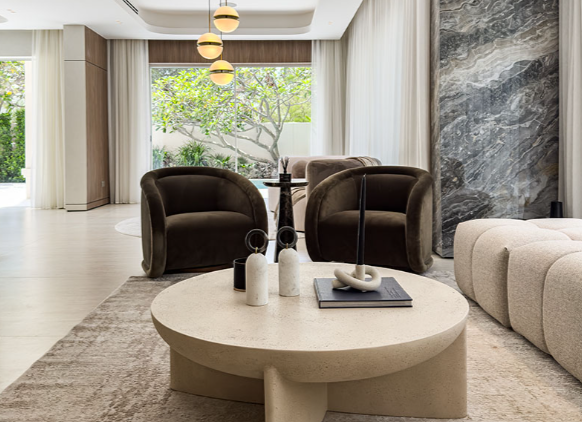
Bespoke Craftsmanship Over Off-the-Shelf
Custom-built elements, joinery, cabinetry, and furniture designed specifically for a space, have become increasingly central to luxury interior projects in Dubai, both residential and commercial. Standard, imported furnishings rarely account for the exact proportions of a Dubai villa or penthouse, which is why bespoke pieces, built to the room rather than fitted into it, remain one of the clearest markers of a genuinely luxury project versus a well-furnished one.
A Cultural Layer That Gives a Space Identity
What’s newest in 2026 is the deliberate integration of cultural layers into otherwise contemporary interiors, particularly in high-end villas and penthouses. Rather than choosing between a fully modern aesthetic and traditional Arabian design, the strongest projects blend the two: contemporary lines and materials carrying subtle cultural detailing, intricate patterns, traditional craftsmanship references, regional textiles, that give a space real identity rather than a look that could belong anywhere in the world.
Layered Textures That Add Depth Without Clutter
Mixing fabrics, wood, and metal within a single space creates depth without requiring more objects or ornamentation. This is part of why 2026’s luxury interiors feel more tactile than previous years’ trends: crisp linen, lavish velvet, muted metals, and textured stone working together, rather than one dominant finish repeated throughout a room.
Why This Matters for Your Luxury Design in Dubai Project
At Wonderwall, we build every luxury interior design project around these same principles: real materials, purposeful restraint, technology that stays out of the way, and craftsmanship tailored to the specific space rather than dropped in from a catalog. It’s this combination, not any single dramatic feature, that distinguishes a luxury interior that will still feel considered in ten years from one that was only ever designed to impress on move-in day.
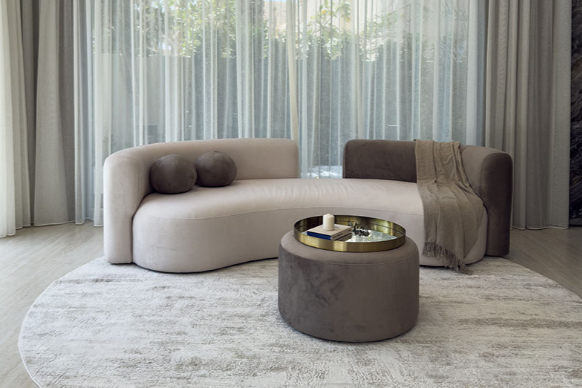
Start Your Luxury Design in Dubai Project With Wonderwall
Whether you’re planning a villa renovation, a penthouse refresh, or a full residential fit-out, our team can walk you through material selection, layout, and bespoke furniture design tailored to your space. Get in touch with Wonderwall to begin the conversation.
FAQs
A combination of authentic natural materials, warm minimalism, biophilic elements, invisible smart technology, and bespoke craftsmanship, favoring purposeful design over decorative excess.
Yes, though its use has expanded beyond flooring and countertops into statement walls, staircases, and custom furniture, often paired with warm wood tones rather than used alone.
Biophilic design incorporates natural light, greenery, and water features into interiors. In Dubai's dry climate, it's a deliberate way to reconnect indoor spaces with nature.
It's now considered a baseline expectation rather than a standout feature. What distinguishes true luxury in 2026 is technology that's integrated invisibly rather than visually prominent.
Bespoke furniture and joinery are built to a space's exact proportions and needs, while standard imported furnishings often don't account for the specific dimensions of Dubai villas and penthouses.

